Publikationen
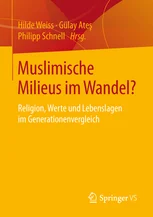
Muslimische Milieus im Wandel? Religion, Werte und Lebenslagen im Generationenvergleich
In diesem Band werden soziale und religiös-kulturelle Milieus von MuslimInnen im Generationenwandel dargestellt und die vielfältigen innerfamiliären Transmissionsprozesse in muslimischen Familien (auf Basis von 363 Eltern-Kind-Dyaden) untersucht. Im Mittelpunkt der vergleichenden Analysen zwischen den Generationen stehen Zusammenhänge zwischen religiösen Einstellungs- und Verhaltensmustern mit relevanten Bereichen, wie Familie, Demokratie und Rechtsstaat, religionsmotivierte Gewaltbereitschaft, sozioökonomischer Aufstieg und Re-Migrationsabsichten. Darüber hinaus werden die Ressentiments und Wahrnehmungen der Mehrheitsbevölkerung mit den Sichtweisen und Problemwahrnehmungen von MuslimInnen kontrastiert.
The Academic Achievements of Immigrant Youths in New Destination Countries: Evidence from Southern Europe
This article examines academic achievements of immigrant youths in four new immigration countries: Greece, Italy, Portugal and Spain. The analysis based on the Programme for International Student Assessment (PISA) of 2009 and 2012 reveals large educational achievement gaps between immigrant children and natives in all four south European countries. The achievement gaps shrink substantially after accounting for differences in family backgrounds. The drawbacks faced by immigrant children in these four new immigration countries are due to fewer economic and material resources being available to them. On the other hand, the educational background of parents does not account for immigrant−native differences in academic performance. This stands in contrast to many traditional European immigration countries in which a lack of educational resources explains larger parts of the educational disadvantages of immigrant children. Our findings provide empirical evidence for the very precarious socio-economic integration of adult immigrants in new destination countries who, despite their relatively strong educational credentials, are placed into the lowest occupational positions. Such weak occupational attainments among the parental generation translate into a lack of material resources and investments available to families to foster their children’s education.
Network Embeddedness of Migrants: Exploring Variations Across three Neighbourhoods in Vienna
This chapter analyses the local network embeddedness of migrants and their descendants in three different Viennese neighbourhoods and explores the impact it has on community cohesion. We argue that not only are individual characteristics key for the formation of migrants’ networks, but also neighbourhood conditions, as they provide opportunity structures for establishing both bridging and bonding ties and therefore significantly shape access to resources. The three neighbourhood case studies were selected for the diversity they represent in terms of locality, structural features, and their socio-economic and ethnic composition. Using data gathered as part of the 2010 GEITONIES survey we offer an exploration of if, why and how migrants access, develop and maintain different types of local networks in different social and spatial contexts.
Place Attachment and Social Ties – Migrants and Natives in Three Urban Settings in Vienna
With ongoing immigration from ‘all over the world’, European cities are realising that the local level is gaining importance as a setting for interethnic coexistence. In this article, we investigate the attachment of migrants and natives to their local context in three neighbourhoods (one better‐off, two more deprived) in Vienna that differ in contextual, structural, and socio‐economic characteristics. We ask how the place attachment of natives and migrants is related to weak and strong social ties. In all three neighbourhoods, we found a majority of residents reported high or medium levels of attachment proving that urban neighbourhoods are still important contexts for local residents. A closer look revealed differences across groups and research areas: The strongest place attachment is displayed by natives in the middle‐class area of Laudongasse, with migrants being significantly less attached, but still more than migrants (and natives) in the two deprived settings. In social housing (Am Schöpfwerk), migrants are more attached than natives, whereas in Ludo‐Hartmann‐Platz, the difference is not significant. The first result is that obviously deprivation reduces individual place attachment. In contrast to previous studies we found that socio‐demographic factors are not relevant, it is social contacts that are important in explaining local attachment. For natives and migrants alike, close ties in the neighbourhood raise local attachment. Small talks are relevant for migrants but not for natives. This is in line with previous studies emphasising the special relevance of weak ties for migrants in supporting the integration process in a new environment.
CMS Behind the Scenes
This article explores school-related involvement strategies within Turkish families in Austria, France and Sweden and their linkages with educational achievements of their children. Using data from the TIES survey, results show that the educational attainment of second-generation Turks in Austria is much more dependent on various activities of support provided by their parents when compared to their counterparts in France and Sweden after holding family background characteristics constant. Besides, the educational success of second-generation Turks in Austria is reliant on the extra support they receive from older siblings beyond parental involvement and education background. No such significant effects were observed in either France or Sweden. The paper further reveals that second-generation Turks are more reliant on educational support from their parents than are the children of majority families within Austria. The paper suggests that these different findings across countries have to be read in the light of interaction mechanisms with institutional settings of the given education systems.
CMS Special Issue – Introduction
Recent literature has emphasised the importance of family involvement within immigrant families in determining their children’s educational pathways. On the one hand, the focus on family involvement and the transmission of familial resources becomes more important when disentangling ethnic educational inequalities for second-generation youth. On the other hand, particular practices of family involvement seem to counterbalance disadvantaged origins and become the driving force for educational success. However, few, if any, studies systematically explore the importance of family involvement for educational success by children of immigrants from an international comparative perspective. This introduction paper attempts to fill this gap. In addition to previewing the contents of the articles found in this issue, we include a comparative review of the main communalities found in the contributions of this special issue. The paper concludes with suggestions for future comparative research on family involvement and educational success by children of immigrants in Europe.

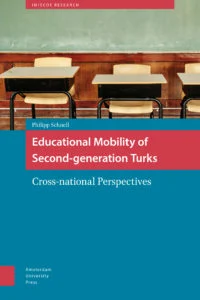
Educational mobility of second-generation Turks. Cross-national perspectives
This research volume investigates educational inequalities among children of Turkish immigrants in multiple North-Western European countries. Turks are one of the largest immigrant groups in this region, and they are among the most disadvantaged in terms of education. This study seeks the causes of variations in educational mobility of second-generation Turks across three European countries and five cities in Sweden, France, and Austria.
The findings show that differences are most pronounced in the Austrian education system. They can be seen clearly in France, and they are least pronounced in the Sweden. Cross-national differences are explained via an investigation of individual and institutional factors and the interactions between the two. The study underscores the importance of both individual characteristics and institutional ones. But the institutional arrangements of education systems are found to matter more for the outcome of this mobility process. In educational systems that provide more favourable institutional arrangements, educational mobility of second-generation Turks becomes less dependent on individual-level factors and resources, thus leading to greater educational achievement.
_________________________________________
“This methodologically sophisticated dissection of the roots of educational disadvantage among the children of Turkish immigrants in Austria, France, and Sweden subtly probes the interplay of family background, school experience, and educational systems. It gives us the clearest picture yet of what counts, when, and why.”
– John Mollenkopf, Distinguished Professor, City University of New York Graduate Center
“ Of great interest not only to migration scholars and specialists in the education of children of migrant origin, but also to researchers in the sociology of education and others concerned with education in general.”
– Rosa Aparicio Gómez, Instituto Universitario de Investigación José Ortega y Gasset
„The range of quantitative methods utilized in order to adopt different analytical angles is impressive … A clear contribution to the field.”
– Can M. Aybek, Bremen University of Applied Sciences
_____________________________________________________
News Stories
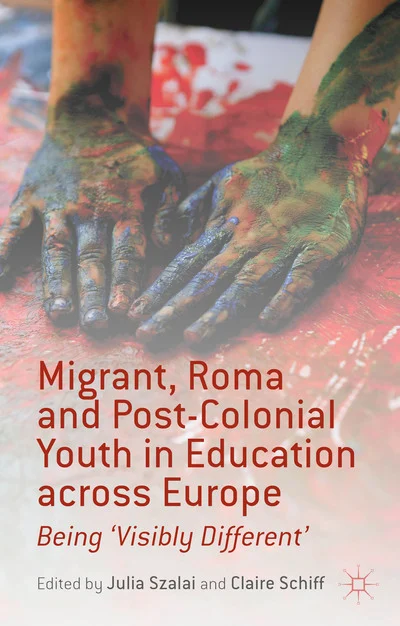
Inclusive education for children of immigrants: The Turkish second generation in Sweden, the Netherlands and Austria
This study examines the factors that contribute to cross-national differences in educational attainment among second-generation Turks in Austria, the Netherlands and Sweden. Drawing on the international TIES survey we investigate empirically school trajectories and outcomes from descendants of Turkish immigrants in the three countries to identify the main driving forces behind social mobility. We pay particular attention to the interactions between the prevailing institutional arrangements in school and the role that family resources play in education to explain cross-national differences in outcomes. Our results show these crossnational differences can hardly be explained by differences in the parental generation of second-generation Turks. Instead, our empirical evidence highlights that the interaction between the institutional arrangements and family level factors determines the direction and the ultimate outcome of the educational process. Education systems which provide more favourable institutional arrangements render second-generation Turks less dependent on family factors and resources and ultimately lead to their higher educational attainment.
Wie die Eltern, so die Kinder?’ Zur Bedeutung familiärer Transmission im gesellschaftlichen Integrationsprozess”
The social wellbeing of second-generation Turks in two Austrian cities
The most recent Austrian Integration Report indicates that a substantial proportion of Turkish immigrants do not feel at home in Austria. Whether these lower levels of social well-being also apply to the Turkish first, second or follow-up generations in Austria is uncertain. This article aims to fill this gap by asking how the Turkish second generation perceives their social inclusion into Austrian society. Results based on the TIES survey reveal that social well-being is largely determined by immigrants’ socioeconomic achievements as well as by experiences of discrimination in their educational and occupational trajectories and daily life. Intergenerational progress is also found to be positively related with social well-being but at a much lower level.
Zwischen den Generationen
Dieser Band rückt innerfamiliäre Transmissionsprozesse in Familien mit Migrationshintergrund in den Mittelpunkt. Die Beiträge untersuchen innerfamiliäre Weitergabe in den Bereichen Sprache, Bildung und Mobilität, Heirat und Kontakte bis hin zu Werte, Tradition und Religion. Wandel und Kontinuität zwischen den Generationen nehmen dabei eine Schlüsselstellung ein. Die hier präsentierten Forschungen zeigen in einer ausgewogenen Verbindung von quantitativen und qualitativen Fallstudien, wie intergenerationale Dynamiken die Konturen der Lebenswege und Erfahrungen der Nachfolgegenerationen von MigrantInnen bestimmen und die individuellen Lebensverhältnisse und Chancen außerhalb des Elternhauses beeinflussen. Sie ermöglichen es darüber hinaus, Langzeit-Effekte der Einwanderung in der Aufnahmegesellschaft aufzudecken und theoretische Überlegungen zum Integrationsverlauf zu überdenken.
»Book Review [German]«
Turkish migrants and their descendants in Austria: Patterns of exclusion and individual and political responses
Turkish immigrants and their descendants have become the main target of antiimmigrant political mobilization in Austria since the 1990s. They have come to epitomize the image of the Oriental enemy and the Muslim other. Based on these discursive constructions, Muslims in general, and Turks in particular, have often been described as unwilling to integrate into Austrian society. The articles in this special issue show not only that these discourses and exclusionary attitudes may result in discriminatory practices towards Turkish immigrants and their descendants in Austria, but also that the alleged unwillingness to integrate may be explained by the lack of effort made by the Austrian government and Austrian institutions to integrate this group.
Success against all odds: Educational pathways of disadvantaged second-generation Turks in France and the Netherlands
By drawing on comparative analyses of successful second-generation Turks from disadvantaged family backgrounds in France and the Netherlands, this article examines pathways and mechanisms that lead to educational success against the backdrop of structural and familial disadvantages. We foreground the experiences and practices of successful second-generation Turks in both countries and demonstrate the importance of institutional arrangements and their interactions with individual resources to account for their success. We use data from the “The Integration of the European Second Generation” (TIES) survey to reconstruct school careers and to inventory opportunities and constraints presented to them in the most important selection processes. We illustrate our findings with life stories drawn from qualitative interviews with TIES respondents in both settings. Combining the results of both quantitative and qualitative data analysis allows us to unravel the mechanisms of the educational success of second-generation Turks from disadvantaged backgrounds.